Hover or tap a word to see its match.
Part 1
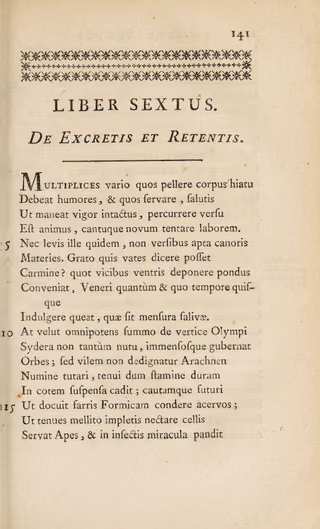
BOOK SIX.
ON THINGS EXCRETED AND RETAINED.
WHAT manifold humors the body ought to expel through its various openings, and which ones it ought to retain, so that the vigor of health may remain intact, it is my purpose to run through in verse, and to attempt a new labor in song.
Nor indeed is it a light one; the subject matter is not suited to melodious verses. What poet could tell in a pleasing song how many times it is fitting to lay down the burden of the bowels, how much and at what time each person may
indulge in Venus, and what is the proper measure of saliva?
Yet just as the Almighty, from the highest summit of Olympus, governs with His nod not only the stars and the immense spheres, but does not disdain to protect the lowly spider with His divine power while, suspended by a slender thread, she drops onto the hard crag; and just as He taught the ant, provident of the future, to store up heaps of grain; just as He preserves the tiny bees when their cells are filled with honeyed nectar, and unfolds in insects miracles
MULTIPLICES vario quos pellere corpus hiatu
Debeat humores, & quos ſervare, ſalutis
Ut maneat vigor intactus, percurrere verſu
Eſt animus, cantuque novum tentare laborem.
Nec levis ille quidem, non verſibus apta canoris
Materies. Grato quis vates dicere poſſet
Carmine? quot vicibus ventris deponere pondus
Conveniat, Veneri quantùm & quo tempore quiſ-
que
Indulgere queat, quæ ſit menſura ſalivæ.
At velut omnipotens ſummo de vertice Olympi
Sydera non tantùm nutu, immenſoſque gubernat
Orbes; ſed vilem non dedignatur Arachnen
Numine tutari, tenui dum ſtamine duram
In cotem ſuſpenſa cadit; cautamque futuri
Ut docuit farris Formicam condere acervos;
Ut tenues mellito impletis nectare cellis
Servat Apes, & in inſectis miracula pandit
Part 2
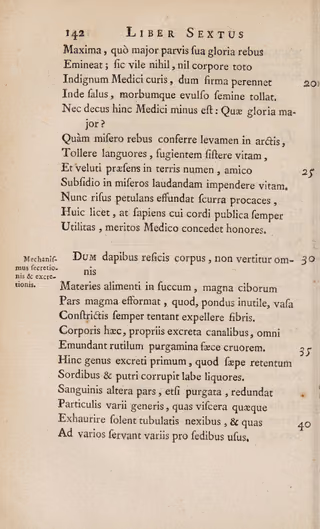
the greatest, so that His glory may shine forth the greater
in small things; thus nothing is base, nothing in the whole body
is unworthy of the Physician's cares, provided that firm health
endures therefrom, and removes disease with its seed torn out.
Nor is the Physician's honor any less from this: What glory is greater
than to bring relief to a wretched man in straits,
to take away faintness, to stay fleeing life,
and like a present deity on earth, with friendly
aid to spend a praiseworthy life upon the wretched?
Now let the petulant buffoon pour forth insolent laughter,
he may do so, but the wise man who always holds the public good
at heart, will grant the Physician the honors he deserves.
Maxima, quò major parvis ſua gloria rebus
Emineat; ſic vile nihil, nil corpore toto
Indignum Medici curis, dum firma perennet
Inde ſalus, morbumque evulſo ſemine tollat.
Nec decus hinc Medici minus eſt: Quæ gloria ma-
jor?
Quàm miſero rebus conferre levamen in arctis,
Tollere languores, fugientem ſiſtere vitam,
Et veluti præſens in terris numen, amico
Subſidio in miſeros laudandam impendere vitam.
Nunc riſus petulans effundat ſcurra procaces,
Huic licet, at ſapiens cui cordi publica ſemper
Utilitas, meritos Medico concedet honores.