Hover or tap a word to see its match.
Part 1
XXVI.
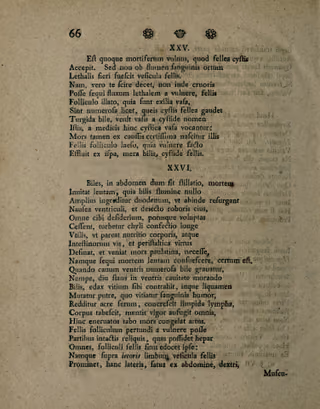
While the dripping of bile into the abdomen takes place, it invites
a slow death, because bile no longer enters
the duodenum in any stream, so that from this there arise
nausea of the stomach, and with the casting down of its strength,
all desire for food and pleasure in drink
cease, the far useful preparation of chyle
is disturbed, so that the nutrition of the body perishes, and
the force of the intestines and the peristaltic power
come to an end, and a gradual death necessarily comes;
for it is certain that a slow death is wont to follow,
when the cavity of the belly is burdened with abundant bile;
namely, standing for a long time by lingering in the cavity of the belly,
the bile contracts a corrosive taint to itself, and is changed
into a putrid liquid, by which the humour of the blood is vitiated,
the serum is rendered acrid, the limpid lymph coagulates,
the body wastes away, all vigour of the mind flees away,
and hence death freezes the limbs enervated by corruption.
That the follicle of gall can be pierced by a wound
while all the remaining parts which the liver possesses are intact,
the very position of the follicle of gall teaches:
for the vesicle of gall projects beyond the edge
of the liver, and this, sprung from the abdomen on the right side,
Biles, in abdomen dum fit ſtillatio, mortem
Inuitat lentam, quia bilis flumine nullo
Amplius ingreditur duodenum, vt abinde reſurgant
Nauſea ventriculi, et deiecto roboris eius,
Omne cibi deſiderium, potusque voluptas
Ceſſent, turbetur chyli confectio longe
Vtilis, vt pareat nutritio corporis, atque
Inteſtinorum vis, et periſtaltica virtus
Deſinat, et veniat mors paulatina, neceſſe,
Namque ſequi mortem lentam conſueſcere, certum eſt,
Quando cauum ventris numeroſa bile grauatur,
Nempe, diu ſtans in ventris cauitate morando
Bilis, edax vitium ſibi contrahit, inque liquamen
Mutatur putre, quo vitiatur ſanguinis humor,
Redditur acre ſerum, concreſcit limpida lympha,
Corpus tabeſcit, mentis vigor aufugit omnis,
Hinc eneruatos tabo mors congelat artus.
Fellis folliculum pertundi a vulnere poſſe
Partibus intactis reliquis, quas poſſidet hepar
Omnes, folliculi fellis ſitus edocet ipſe:
Namque ſupra iecoris limbum veſicula fellis
Prominet, hanc lateris, ſatus ex abdomine, dextri,
Part 2
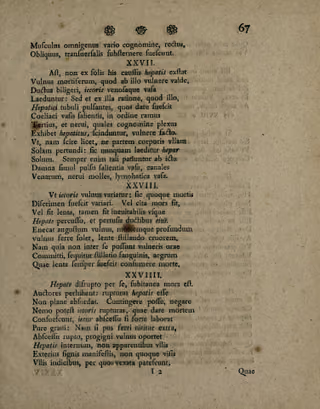
every kind of muscle of various names—rectus,
obliquus, transversalis—are accustomed to lie beneath.
Muſculus omnigenus vario cognomine, rectus,
Obliquus, tranſuerſalis ſubſternere ſueſcunt.