Hover or tap a word to see its match.
Part 1
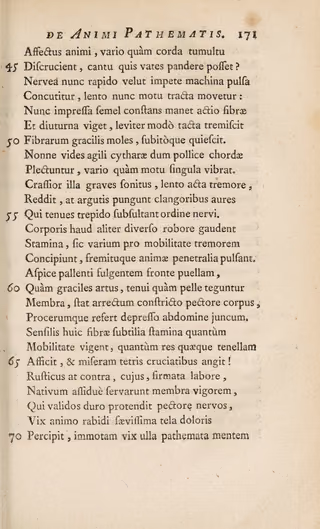
affections of the mind, and with what varied tumult
they torment the heart, what poet could unfold in song?
Now the nervous machine, driven as if by a rapid impulse,
is shaken; now, drawn by a slow motion, it is moved:
now, once impressed, the action of the fiber remains constant
and flourishes long; now, lightly touched, the slender
mass of fibers trembles, and suddenly subsides.
Do you not see how, while the strings of the lyre are plucked
by the agile thumb, each vibrates with a varied motion?
That thicker one, driven by a slow tremor, gives back
deep sounds; while the thin strings, which leap up
in a trembling row, pierce the ears with shrill ringings.
Not otherwise do the stamens of the body rejoice
in diverse strength; thus they conceive a varied tremor
according to their mobility, and strike the inmost recesses of the soul with a roar.
Look at the girl shining with a pale brow,
how slender her limbs, with what thin skin her members
are covered; her body stands erect with constricted chest,
and with depressed abdomen resembles a tall reed.
How greatly in her do the subtle stamens of the sensitive fiber
thrive with mobility, how much does each thing affect
the tender girl, and rack the wretched creature with dreadful torments!
But the rustic, on the contrary, whose limbs, strengthened by labor,
have constantly preserved their native vigor,
who stretches strong sinews in his hard chest,
scarcely perceives in his mind the most savage darts
of rabid pain; scarcely any passions
Affectus animi, vario quàm corda tumultu
Diſcrucient, cantu quis vates pandere poſſet?
Nervea nunc rapido velut impete machina pulſa
Concutitur, lento nunc motu tracta movetur:
Nunc impreſſa ſemel conſtans manet actio fibræ
Et diuturna viget, leviter modò tacta tremiſcit
Fibrarum gracilis moles, ſubitòque quieſcit.
Nonne vides agili cytharæ dum pollice chordæ
Plectuntur, vario quàm motu ſingula vibrat.
Craſſior illa graves ſonitus, lento acta tremore,
Reddit, at argutis pungunt clangoribus aures
Qui tenues trepido ſubſultant ordine nervi.
Corporis haud aliter diverſo robore gaudent
Stamina, ſic varium pro mobilitate tremorem
Concipiunt, fremituque animæ penetralia pulſant.
Aſpice pallenti fulgentem fronte puellam,
Quàm graciles artus, tenui quàm pelle teguntur
Membra, ſtat arrectum conſtricto pectore corpus,
Procerumque refert depreſſo abdomine juncum.
Senſilis huic fibræ ſubtilia ſtamina quantùm
Mobilitate vigent, quantùm res quæque tenellam
Afficit, & miſeram tetris cruciatibus angit!
Ruſticus at contra, cujus, firmata labore,
Nativum aſſiduè ſervarunt membra vigorem,
Qui validos duro protendit pectore nervos,
Vix animo rabidi ſæviſſima tela doloris
Percipit, immotam vix ulla pathemata mentem
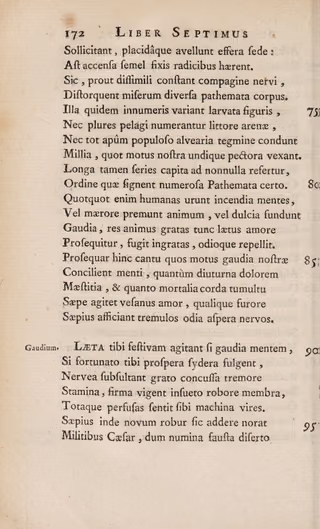
Part 2
disturb, and fiercely tear it from its peaceful seat:
Yet, once kindled, they cling with fixed roots.
Thus, according as the nerves consist of a dissimilar structure,
Diverse passions contort the wretched body.
Indeed, masked, they vary in countless forms,
Nor are more sands numbered on the shore of the sea,
Nor do beehives hide so many thousands of bees under their populous roof,
As the commotions that vex our breasts on every side.
Yet this long series is referred to a few main heads,
Which mark the numerous passions in a definite order.
For whatever fires burn human minds,
They either weigh down the soul with grief, or pour forth sweet
Joys; then the joyful soul pursues pleasing things
With love, flees unpleasing ones, and repels them with hatred.
Hence I shall pursue in song what commotions joys impart to our
Mind, how much pain prolonged sadness
Brings, and with what great tumult
Mad love often agitates mortal hearts, and with what fury
Harsh hatreds more often affect the trembling nerves.
Sollicitant, placidâque avellunt effera ſede:
Aſt accenſa ſemel fixis radicibus hærent.
Sic, prout diſſimili conſtant compagine nervi,
Diſtorquent miſerum diverſa pathemata corpus.
Illa quidem innumeris variant larvata figuris,
Nec plures pelagi numerantur littore arenæ,
Nec tot apûm populoſo alvearia tegmine condunt
Millia, quot motus noſtra undique pectora vexant.
Longa tamen ſeries capita ad nonnulla refertur,
Ordine quæ ſignent numeroſa Pathemata certo.
Quotquot enim humanas urunt incendia mentes,
Vel mærore premunt animum, vel dulcia fundunt
Gaudia, res animus gratas tunc lætus amore
Proſequitur, fugit ingratas, odioque repellit.
Proſequar hinc cantu quos motus gaudia noſtræ
Concilient menti, quantùm diuturna dolorem
Mæſtitia, & quanto mortalia corda tumultu
Sæpe agitet veſanus amor, qualique furore
Sæpius afficiant tremulos odia aſpera nervos.