Hover or tap a word to see its match.
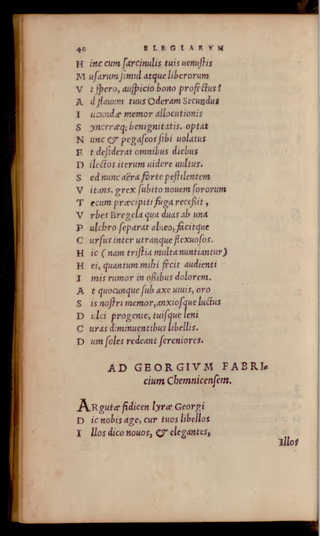
Georgius, player of the clear-sounding lyre,
Come tell us, why your little books,
Those new ones, I mean, and elegant,
Those shining white and polished ones,
polished by you twenty times to a perfect nail,
do you keep them shut up at home? and do you not allow them to go
through the lips of learned men?
Already enough (for there must be a limit)
has wearisome revision constrained them,
already you have added enough charming flowers,
now permit them to wander more freely.
Oh, what a reward for your labor awaits you:
an imperishable name and delight.
Ignoble envy will not harm you with its envious teeth
in the future age.
And joined with many lyric bards you will go
through the world, no less than they, and be read.
Hail, O most charming little books,
in which the sweet Muses have washed
their charming hands, and the Graces and the Hours,
how I shall kiss you three and four times!
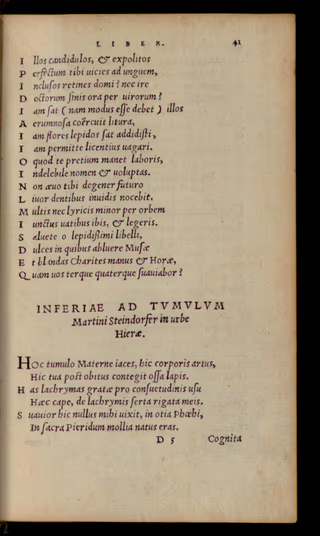
A Rgutæ fidicen lyræ Georgi
D ic nobis age, cur tuos libellos
I llos dico nouos, & elegantes,
I llos candidulos, & expolitos
P erfectum tibi uicies ad unguem,
I ncluſos retines domi? nec ire
D octorum ſinis ora per uirorum?
I am ſat ( nam modus eſſe debet ) illos
A erumnoſa coërcuit litura,
I am flores lepidos ſat addidiſti,
I am permitte licentius uagari.
O quod te pretium manet laboris,
I ndelebile nomen & uoluptas.
N on æuo tibi degener futuro
L iuor dentibus inuidis nocebit.
M ultis nec lyricis minor per orbem
I unctus uatibus ibis, & legeris.
S aluete o lepidißimi libelli,
D ulces in quibus abluere Muſæ
E t blandas Charites manus & Horæ,
Q uam uos terque quaterque ſuauiabor?