Hover or tap a word to see its match.
They have said that frankincense is hot and dry in the second degree.
It clarifies the eyes, if crushed it is dissolved in the watery part of an egg:
Or with warm woman's milk.
Crushed with sharp wine, with pitch and milk mixed in,
They say it especially cures fresh wounds.
Mixed with pork fat it will medicate them.
Mixed with honey and prepared, it clears the nails.
Frankincense well crushed and dissolved in warm wine,
They affirm is of much benefit to an aching ear.
Crushed with wax, thus mixed in rose oil:
They say it cures swollen breasts.
They believe nothing helps more those spitting blood
If it is taken with mixed wine or vinegar.
If you pound frankincense with woman's milk and apply it
To the ulcers that are often seen to occur in the anus
Or otherwise in whatever place, it will cure them.
You will join to this the tear of aloe, and of alum, [and] of an egg
So that it is thick, apply it to a cut vein
Or to those wounds from which it flows with excessive blood
And you will not loosen [it] until you know the divided parts have come together.
If there is need, add the same medicine to the former
Until a solid scar is able to be established.
They affirm that nothing better can stop gore.
It comforts the mindful power of the brain at the first smell.
If anyone chews it joined with oregano,
It repels harmful humors of the head through spit.
That purgation of the head lightens a heavy tongue.
With the fat of a goose or duck mixed with frankincense,
A strong poultice is made for limbs that fire has harmed.
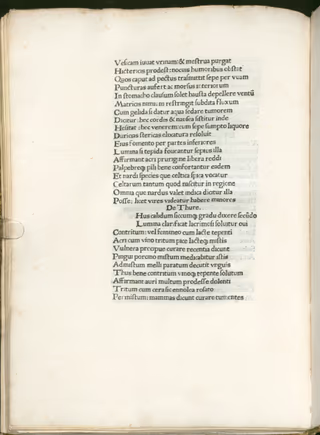
Hus calidum ſiccumqꝫ gradu dixere ſecūdo
Lumina clarificat lacrimoſi ſoluitur oui
Contritum: vel femineo cum lacte tepenti
Acri cum vino tritum pice lacteqꝫ miſtis
Vulnera precipue curare recentia dicunt
Pingui porcino miſtum medicabitur iſtis
Admiſtum melli paratum decutit vnguis
Thus bene contritum vinoqꝫ tepente ſolutum
Affirmant auri multum prodeſſe dolenti
Tritum cum cera ſic in oleo roſato
Permiſtum: mammas dicunt curare tumentes
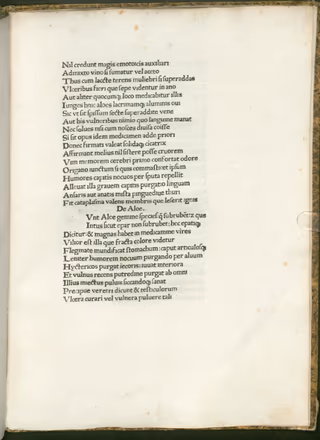
Nil credunt magis emotoicis auxiliari
Admixto vino ſi ſumatur vel aceto
Thus cum lacte terens muliebri ſi ſuperaddas
Vlceribus fieri que ſepe videntur in ano
Aut aliter quocumqꝫ loco medicabitur illis
Iunges huic aloes lacrimamqꝫ aluminis oui
Sic vt ſit ſpiſſum ſecte ſuperaddite vene
Aut his vulneribus nimio quo ſanguine manat
Nec ſolues niſi cum noſces diuiſa coiſſe
Si ſit opus idem medicamen adde priori
Donec firmati valeat ſolidaqꝫ cicatrix
Affirmant melius nil ſiſtere poſſe cruorem
Vim memorem cerebri primo confortat odore
Origano iunctum ſi quis commaſticet ipſum
Humores capitis nocuos per ſputa repellit
Alleuat illa grauem capitis purgatio linguam
Anſaris aut anatis miſta pinguedine thuri
Fit cataplaſma valens membris que leſerit ignis
