Hover or tap a word to see its match.
Part 1
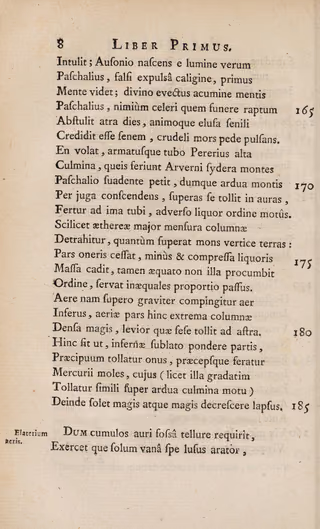
WHILE the plowman, deluded by a vain hope, seeks heaps of gold
in the dug-up earth, and works the soil,
DUM cumulos auri foſsâ tellure requirit,
Exercet que ſolum vanâ ſpe luſus arator,
Part 2
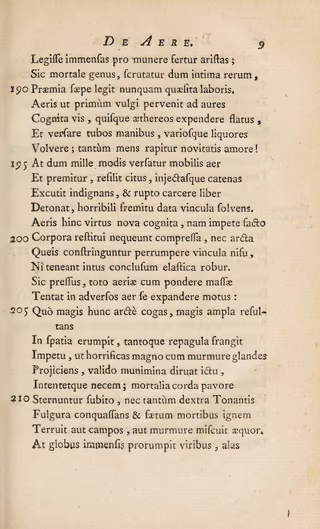
Is said to have reaped immense ears of grain as his reward;
So the mortal race, while it scrutinizes the innermost nature of things,
Often reaps never-sought rewards of its labor.
As soon as the known force of the air reached the ears of the public,
Everyone began to weigh the ethereal breezes,
And to turn tubes in their hands, and to roll around various liquids;
So much is the mind carried away by the love of novelty!
But while the mobile air is turned in a thousand ways
And compressed, it springs back swiftly, and indignantly shakes off
The chains cast upon it, and free from its broken prison,
It detonates, loosing its given bonds with a horrible roar.
Hence a new virtue of the air became known, for with an impulse made,
Compressed bodies cannot be restored, nor by effort break through
The tight bonds by which they are constrained,
Unless, being elastic, they hold an enclosed strength within.
Thus pressed, with the whole weight of the aerial mass,
The air tries to expand itself in opposite motions:
The more tightly you force it together, the wider the spaces
Into which it bursts rebounding, and it breaks the barriers with such
Violence that, hurling terrifying bullets with a great roar,
It demolishes fortifications with a mighty blow,
And threatens death; mortal hearts are struck down
By sudden dread, nor did the right hand of the Thunderer,
Shaking his thunderbolts and fire pregnant with deaths,
So greatly terrify the plains, or confound the sea with its roar.
But the ball bursts forth with immense strength, the wings
Legiſſe immenſas pro munere fertur ariſtas ;
Sic mortale genus, ſcrutatur dum intima rerum ,
Præmia ſæpe legit nunquam quæſita laboris.
Aeris ut primùm vulgi pervenit ad aures
Cognita vis , quiſque æthereos expendere flatus ,
Et verſare tubos manibus , varioſque liquores
Volvere ; tantùm mens rapitur novitatis amore !
At dum mille modis verſatur mobilis aer
Et premitur , reſilit citus , injectaſque catenas
Excutit indignans , & rupto carcere liber
Detonat, horribili fremitu data vincula ſolvens.
Aeris hinc virtus nova cognita , nam impete facto
Corpora reſtitui nequeunt compreſſa , nec arcta
Queis conſtringuntur perrumpere vincula niſu ,
Nî teneant intus concluſum elaſtica robur.
Sic preſſus , toto aeriæ cum pondere maſſæ
Tentat in adverſos aer ſe expandere motus :
Quò magis hunc arctè cogas , magis ampla reſul-
In ſpatia erumpit , tantoque repagula frangit
Impetu , ut horrificas magno cum murmure glandes
Projiciens , valido munimina diruat ictu ,
Intentetque necem ; mortalia corda pavore
Sternuntur ſubito , nec tantùm dextra Tonantis
Fulgura conquaſſans & fætum mortibus ignem
Terruit aut campos , aut murmure miſcuit æquor.
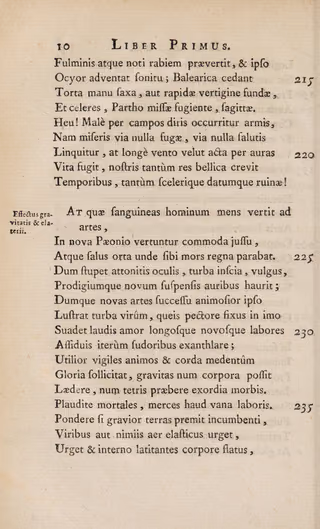
At globus immenſis prorumpit viribus , alas
Part 3
of the thunderbolt and the fury of the south wind it outstrips, and swifter
than its very sound it arrives; let the Balearic stones
hurled by hand yield to it, or by the whirl of the rapid sling,
and the swift arrows shot by the fleeing Parthian.
Alas! Ill is it to meet such dire weapons across the plains,
for to the wretched no path of flight, no path of safety
is left, but far off, as if driven by the wind through the breezes,
life flees; so much has the art of war grown in our
times, so much has been given to crime and to ruin!
Fulminis atque noti rabiem prævertit, & ipſo
Ocyor adventat ſonitu; Balearica cedant
Torta manu ſaxa, aut rapidæ vertigine fundæ,
Et celeres, Partho miſſæ fugiente, ſagittæ.
Heu! Malè per campos diris occurritur armis,
Nam miſeris via nulla fugæ, via nulla ſalutis
Linquitur, at longè vento velut acta per auras
Vita fugit, noſtris tantùm res bellica crevit
Temporibus, tantùm ſcelerique datumque ruinæ!