Regimen sanitatis Salernitanum: The Salernitan rule of health in Latin verse, with English poems and receipts, Wellcome MS 673
By Anonymous (Salernitan tradition) · Published 1450 · Latin with English translation · Wellcome Collection
Historian’s note. This text records the medicine of its own time, and later evidence has replaced most of it. It is not medical advice. We read it as history, and we ask what, if anything, connects it to medicine today.
Historian’s note. This text records the medicine of its own time, and later evidence has replaced most of it. It is not medical advice. We read it as history, and we ask what, if anything, connects it to medicine today. More on how we read old medical books
Regimen sanitatis Salernitanum
The Salernitan rule of health in Latin verse, with English poems and receipts, Wellcome MS 673
By Anonymous (Salernitan tradition), 1450. The edition has the page scans, the Latin text, and an English translation.
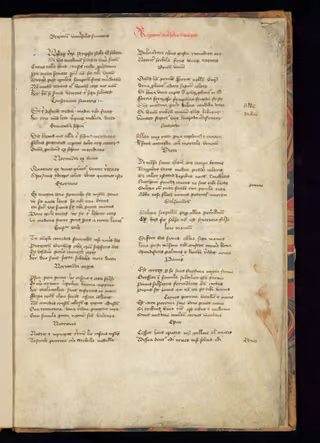
This manuscript of nine vellum leaves opens with the Regimen sanitatis Salernitanum, the Latin verse rule of health. Its first lines say that the whole school of Salerno wrote it for the king of the English. This copy is a shortened version of 844 lines, written in a clear book hand in two columns of 46 lines. Short Latin headings name each subject, for example the spleen, medlars, salt, purslane, the four complexions, the times for bloodletting, baths and the colours of urine. The poem ends on folio 7v with “Here ends the treatise which is called Flos medicine”.
Later hands used the remaining space for English. On folio 7v, verses on the virtues begin “With sapyence tempre thi corage”, and an oath for a widow who brings an appeal of murder follows. Folios 8r and 8v hold De veritate et consciencia, an English poem of 148 lines that asks where Truth and Conscience have gone, then a Latin poem on giving and twelve more lines of English verse. Under the last column a Latin line reads “On Crispin’s day the English laid low many Frenchmen”. The Wellcome catalogue takes it as a reference to Agincourt in 1415. Folio 9r has medical receipts, among them a purging potion and a hippocras, and the English poem “When lyfe is moost loved”.
| Date | Place | Work | Notes |
|---|---|---|---|
| Before c. 1450 | Salerno | Regimen sanitatis Salernitanum By School of Salerno | The poem names its authors in its first line: “the whole school of Salerno wrote to the king of the English”. In this copy it is called the Flos medicine in its last line. |
| c. 1450 | Wellcome MS 673 | Nine vellum leaves in several hands, in an eighteenth-century half-calf binding. A sixteenth-century owner, Gregor Fabig, wrote on the first leaf. Sir Thomas Phillipps noted in pencil on the flyleaf that it came from the library of the Rev. Philip Bliss of Oxford. It was Phillipps MS 18134 and was sold at Sotheby’s on 15 June 1896, lot 965. |
Poems
212 poems, sorted by title.
- ⁊ ſalſa 7
- 415 Bolus
- Abrotanū Ad n̄uos ꝑtus ⁊ aures
- Abſinthiū Ad humores ⁊ nauſeam
- Accedula ad fluxum
- Accidens medicine
- Acetum
- Acutꝰ :- Vipa · ⁊ offa
- Ad dentes
- Ad fiſtulam
- Ad oculos
- Ad plagam
- Ad reuma
- Agaricus
- Allea ꝑ fetōe ⁊ voce clara
- Aloes ad cancꝝ ⁊ caniciem
- Amb̄ſia ad fiſtulā ⁊ canc̄m
- Anetū
- Anıſū Ad ſtomachū
- Antes . i flos
- Antitoda
- Apiū
- Armoniacū ad duriciē ver mes vrinā ⁊ ſtrofas
- Artemeſia Ad lapidē abortiūū ⁊ vrinā
- Atriplex
- Balnea
- Betonica Ad ſꝑētes ⁊ lac̄mas
- Blitus
- Bonū vinū
- Borago
- Bugloſſa ad mēoriā c̄ebri
- Camphora
- Capillꝰ veneris
- Capparis
- Carabe
- Carlwey
- Carnes porcine vitulīe ⁊ ouīne
- Caſſia ad os fetidū ⁊ cardiacos Ori fetenti ſtomacho cordiꝙ dolenti
- Caulis
- Cauſa colice
- Cauſe cōſtipacionis
- Cauſe doloris capitis
- Cauſe febris
- Cauſe purɡacionis
- Cauſe raucedinis
- Cauſe titubacionis
- Cauſe tīultꝰ
- Cautela
- Celidonia
- Cepa Ad capillos
- Cepe Ad flēmnaticos
- Cerifoliū Ad canc̄ ⁊ vomitū
- Cētaurēa Ad n̄uos ⁊ viſū
- Ciparus
- Cımınū Ad vētoſū ſtomachū
- Colerıcus
- Colōes vrīne
- Complexiones
- Condiciōes ad pocionē
- Conſiⁱᵐ vtile
- Contagioſa
- Coriandrū ad febres t̄cianas
- Crocus
- Cula
- Cura colice
- De mō medendi
- De ſōpno
- De ſtercor̄ •
- De ſudore
- Dieta
- Dieta
- Diſpōiciōes ad pocionē
- Diſpoſicio ad flembotomīā
- Effcūs ſaluatelle
- Effcūs ſōpni
- Effectus balneo
- Effectꝰ flembotomie
- Eleborus Ad mures muſcas ydropiſim tetanū lep̄m ⁊ podaḡm
- Enula campana
- Epilogus
- Exortacio
- Exortacio
- Ffaba
- Ffenıclū Ad pulmonē ⁊ iecur
- Ffenugrecū
- Fflēmatıcꝰ
- Fflembotomia
- Ffucfur ad vlc̄a cū ſcabie
- Galanga ad flemna ſtochi + digeſcionem
- Galla ad fluxū matricis ⁊ vulnera
- Gen̄a morbi
- Granatū Ad ſudorem
- Hij sunt humoēs quī ꝑstāt cuıꝙ colores
- Impedimēta auditꝰ
- Induſtria medici
- Interdicta
- Iudıcıū ſāġnıs
- Iunge papau̾ ei cōsita forꝭ trahit ossa
- Juſticia
- Lactuca
- Lappaciū acut̄ Ad ſcabiē ⁊ pruritꝰ
- Laus diete
- Leuſtica
- lilia
- Lıquıricıa Ad p̄ctus ⁊ pulmonē
- locio manuū
- Lupinī
- Malācolıcꝰ
- Malangıa
- Malua ad ſtrofas tumorē mamme ⁊ dentes
- Malus
- Medicine oclōrꝫ
- Melancolica ſuꝑ habundās
- Membra officialia
- Membra ſimplicia
- Meſpula
- Mēta
- Mirra iuuat pectus matricē vasa caputꝙ
- Morbi hereditarij
- Morbi melācolicoꝝ
- Mortale bumbū
- Muſcata Ad ſtomachum
- Muſtū
- Narſturtū Ad dentes
- Nigella Ad canc̄m vulnā ⁊ lepram
- Nō debꝫ fieri purɡacio
- Nō detur medicina
- Nocum̄ta oclōrꝫ
- Nutrit ⁊ inpinguat t̄ticū lac caseus infās
- Nympha
- Olera autūpni
- Olera eſtatis
- Olera hiemis
- Olera veris
- Ordo diete
- Panis
- Papaū ad mēſtrua mor feam ⁊ cruorem
- Paſtinata
- Pₑsica pira poma lac caseus ⁊ caro salsa
- Pīnea
- Pionia Ad ſplenē iecur renes
- Piꝑ albus ad tuſſim ⁊ febres
- Piꝑ nigꝝ ad flemma et digeſtionem
- Piretrū ad flemma ⁊ caduc̄
- Plantago
- Plenreſis
- Porrus
- Portulata
- Praſſius Ad p̄ctus ꝑtūs ⁊ do lorē lateris
- Prudencia
- Ptiſin
- Pulegiū Ad colerā nigrā ⁊ podagrā
- Purgamēta capitis
- Purgatiua
- Ꝑhibicō flembotomıe
- Quādo debet fieri
- Que ⁊ quādo
- Quibus nō cōpetit balnea
- Rapa
- Rāpum ad lep̄m ⁊ lapidē
- Receptac̄la humorꝫ
- Regula gen̄alis
- Res naturales
- Res nō naturales
- Restat ventosa cōpleta flembotomıa
- Roſa
- Ruta Ad lumē
- Sāguıneus
- Sal Ad ſaporē
- Salgia Ad cruorē febres ⁊ paliſim
- Salix Ad aures verucas ⁊ ꝑtus
- Salſamētū
- ſambucꝫ
- Sapiencia
- Sarcocolla ad fluxū cōrꝝ
- Scabioſa Ad p̄ctus pulmonē cōn venenū ant̄cem
- Scarıfıcacio
- Septem cara
- Seruiſia Ad vrinā
- Si ṫ deficiāt medici . medici tibi fiant
- Si vis incolumē si vis te viuē sanū
- Signa lepre
- Sinapis Ad venenū ⁊ capᵗ
- Siſileos Ad lūmen
- Solſequiū
- Spagus Ad colicā ⁊ ſp̄ma
- Species febris
- Species gutte
- Spes balnee
- Spinachia
- Spodiū Ad cruorē
- Squilla Ad lupū ict̄icos ⁊ yd̄piſim
- Sudor multꝰ
- Tempꝰ ad lunā
- Tempꝰ elc̄onis
- Tempꝰ flembotomie
- Tempꝰ neceſſitatis
- Thus ad vlc̄a ⁊ verucas ⁊ māmas
- Tres humiditates
- Triplex tipus
- Vaſa humorꝫ
- Vene cōmūes
- Vene facıei
- Ventoſacio
- Verus medicꝰ
- Viola ꝑ caducis
- Virga paſtoris Ad cruorē ficꝰ capitis dolori
- When lyfe is moost loued
- Ydromellū
- Yſopus Ad p̄ctus flēma et pulmonē
- Zeduarıū Ad morbū īueterātū ⁊ mollendū ventrē
- Zınzıber